
Endometriosis is more than a pelvic condition. What the largest genetic study ever conducted means for yoga teachers.
How to understand endometriosis as a systemic condition, and what it changes in the way we teach.
Many yoga teachers have been told that endometriosis is, first and foremost, a pelvic condition. That it shows up as painful periods, and that yoga for endometriosis means soothing the pelvis and the cycle.
This is broadly true, but the latest research adds an important layer, one that converges with the way we already look at the whole person in EndoYoga: body, mind, emotions, social context, environment, the rhythms of nature, all interconnected, grounded in science, in lived experience, in the yogic and Ayurvedic framework, and translated into personalised, adapted practices.
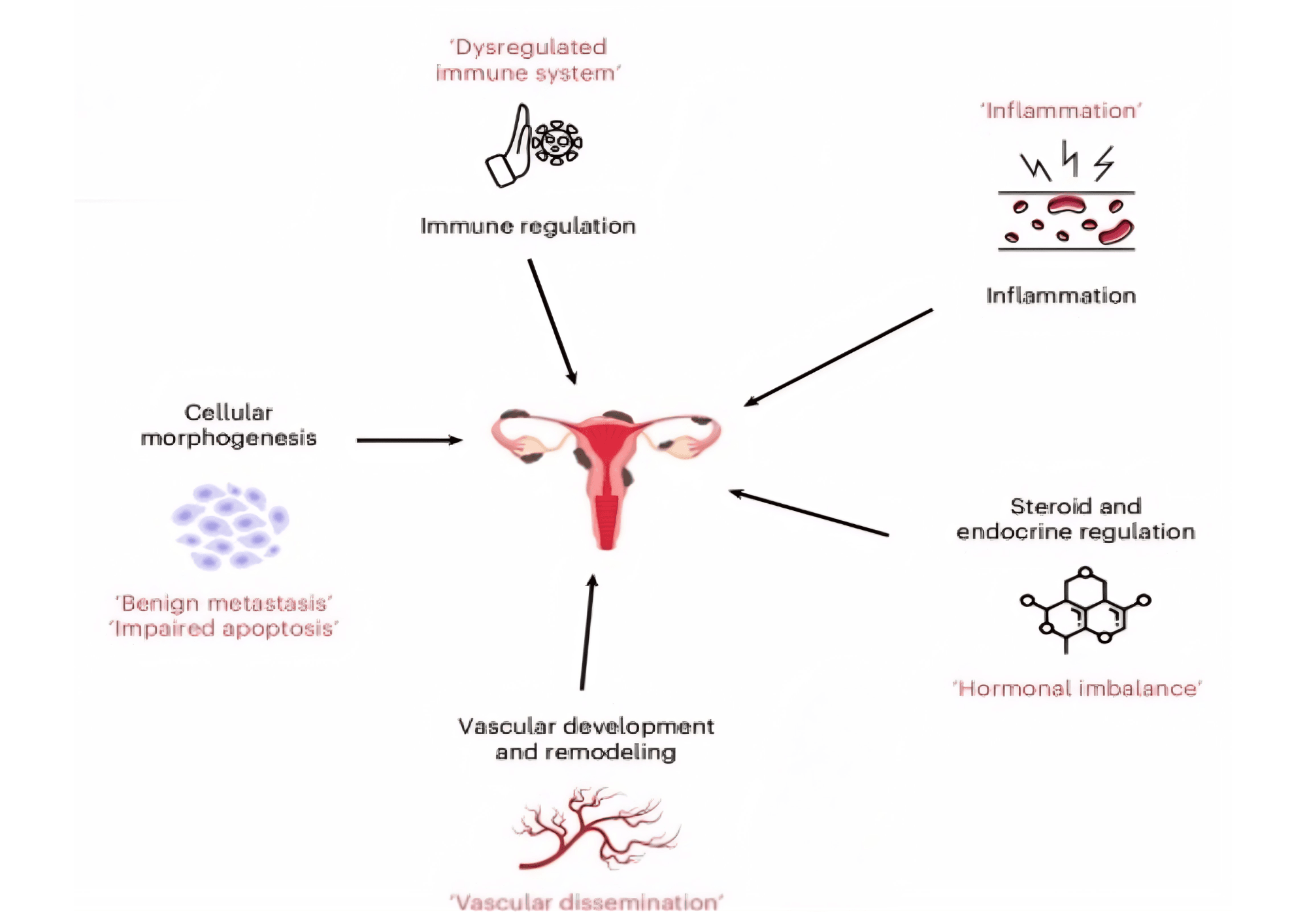
A study published in Nature Genetics at the end of April, conducted on 1.4 million women, is the largest genetic study ever done on endometriosis. It strengthens our understanding of endometriosis as a systemic condition, not only a pelvic one.
This raises an important question for yoga teachers. If endometriosis is systemic, where does our practice fit into this picture, and how should we adapt the way we teach?
What does the study say
Researchers identified 80 genomic regions associated with the risk of developing endometriosis, of which 37 are new. Five of these are also shared with adenomyosis, which begins to explain why the two so often coexist in the same woman.
But the more interesting finding lies in the method. The researchers used a multi-omics approach. They looked at the DNA, the proteins these genes produce, and the tissues where these proteins are active. Biology read as a network, rather than as a list of isolated genes.
What it confirms about the biology
The same genetic signal feeds, simultaneously, immune regulation, chronic inflammation, hormonal signaling, vascular development, and tissue remodelling. Several systems, at once. Endometriosis is whole-body, whole-person, whole-life. The biology now confirms it.
The same genetic signatures are also linked to migraines, anxiety, chronic abdominal pain, and nausea. Symptoms long considered “not really endo” or “besides endo” are part of the biology of endometriosis itself.
The authors also remind us that the genome is not a fixed destiny. The expression of these genes is modulated by food, sleep, stress, life rhythm, and environment. The terrain matters.
Where yoga fits into this picture
Yoga can absolutely contribute to the wellbeing of a woman with endometriosis. It can offer relief in moments of pain. It can support her day-to-day, and her quality of life with endometriosis.
But if the condition is systemic, then a practice limited to the pelvis, or to the days of bleeding, will not address most of what is happening in the body.
This is where our work expands. By looking at the source, and by supporting, over time, the systems involved: the nervous system, the immune regulation, the inflammatory and hormonal balance, the musculoskeletal expression of the condition.
It may also mean offering practice not only for acute pain, or flare-up, but as part of a more consistent and individualised approach to regulation and longer-term balance across the many systems involved in endometriosis.
This is very much the spirit of EndoYoga, and has been for over a decade: not only to help soothe pain and discomfort, but to support longer-term balance through more skilful, grounded, and relevant practice choices.
For yoga teachers
A common idea among students, and among teachers, is that yoga for endometriosis means a sequence for period pain. The new evidence allows us to refine this without dismissing the value of those practices.
It is reasonable to say that yoga in moments of pain offers real relief. In EndoYoga, we have what I call the SOS poses and practices, and each student with endometriosis can return to her own one when she needs it the most.
It is also important to acknowledge that the practice we build for a woman with endometriosis is meant to balance the whole layers of the person and the many factors that shape her terrain, and to support the balance of the whole interconnected systems influenced by endometriosis. It touches all the layers of her experience.
Practical takeaways
Here is what I find myself repeating in every training.
Go beyond yoga for period pain poses. The disease is active outside the days of bleeding.
Go beyond the pelvis. Endometriosis influences all the layers of the person, body, mind, emotions, social environment.
Teach the whole person, not endometriosis, and not a pose. There is no fixed sequence that serves this diversity. There is a teacher who can see the woman in front of her, and adapt the whole system of yoga to her needs.
A simple way to hold this in your work: we accompany the whole woman with endometriosis, not the condition.
Ready to deepen your work with women with endometriosis
The next English cohort of the EndoYoga 50h Yoga Therapy Teacher Training opens in June 2026. A small group, an immersion followed by six months of mentorship, and the time to build this informed presence that your students, current or future, are looking for. You will benefit from a decade of experience, and leave well-rounded and confident to offer dedicated work to women with endometriosis, in 1:1, in classes, and in workshops.
See you soon, on or off the mat,
Aurélie
About the author:
Aurélie Maire. Lifelong Yoga and life student. Yoga therapist, book author, integrative women’s health educator. Biochemist and nutrition scientist. Bridging science, yoga & Ayurveda into concrete practices for women with endometriosis, menopause & beyond. Training yoga teachers and professionals worldwide.
Reference: Koller D, He J, Polimanti R et al. Multi-ancestry genome-wide association and integrated multi-omics analyses of endometriosis and its clinical manifestations. Nat Genet. 2026 May;58(5):1051–1061.

0 Comments